
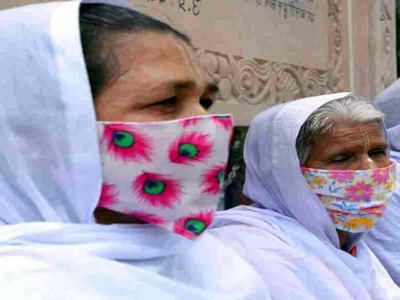
Agra: Widowhood continues to remain a big social stigma in India, despite a slew of social welfare measures to empower women, taken by the union and state governments, since independence.
Though the general health and the literacy rate of women have improved over years, widows still continue to suffer the pangs of poverty and social discrimination, say social scientists in Agra.
“Even the issue of promoting widow remarriages, hangs fire as government agencies and hundreds of caste-based organizations have been dragging their feet to support the much-needed reform in the Hindu society,” says social activist Jyoti Jha.
Demands are now being made to provide reservations in jobs to the widows, an NGO functionary Sonal Mittal said. The gender gap in employment opportunities needs to be bribed. Unfortunately, there still is no national public policy relating to reforms to empower the over 55 million widows in our country, Sonal added.
While there has not been much improvement in the status of widows who continue to suffer at the hands of their own family members, a few organizations have been doing a yeoman’s service to provide support to the widows.
Sulabh International opened several shelters for the widows of Vrindavan. To bring some happiness and integrate these hapless widows into the mainstream, noted social reformer Dr. Bindeshwar Pathak initiated celebrations of Hindu festivals in a big way by the widows of Vrindavan. His organization looks after hundreds of widows living in various ashrams in Vrindavan and Varanasi since 2012.
On a routine basis, Sulabh provides their medical facilities and vocational training besides meeting their day-to-day needs so that they do not feel left out during the twilight years of their lives.
The Vrindavan widows, who have continued to defy the age-old Indian traditions by celebrating not only Dipawali but Holi and Raksha Bandhan, besides taking part in Durga Puja celebrations in West Bengal, no longer feel marginalized. Years of darkness have vanished from their lives which had disillusioned them after losing husbands in wars, diseases, or chill penury.
Around a thousand widows, mostly from West Bengal, have been living in Vrindavan for decades. These widows were not allowed to take part in rituals till NGO Sulabh International extended a helping hand to them.
Breaking several established traditions, the activists helped widows to take part in a series of rituals to join the mainstream of society.
Even today in Varanasi and Vrindavan, thousands of widows lead an isolated life to attain moksha or liberation from the cycle of death and rebirth. Living in small rooms in narrow alleys, they spend most of their time praying and looking for food.
Some years ago, after death, their bodies were dumped into funny bags and disposed of. But conditions have now improved for the better.
According to Rajiv Gupta of Lok Swar, an NGO, in Agra, more than 15,000 widows live in Mathura, Vrindavan, Goverdhan, and Radha Kund. Of the around 115 million widows worldwide living in distress and facing brutalities, some 81 million are also subjected to sexual amusement. Though Yogi Adityanath, the UP chief minister has announced pension for women above 60 years, the amount is peanuts. Society itself will need to review its attitude towards widows, Gupta said.
Related Items
Meet the ‘Radio Man of India’, Record holder Radio Collector!
How India’s smog has turned breathing into a class divide…
Webinar on Gender-Inclusive Leadership for Developed India