
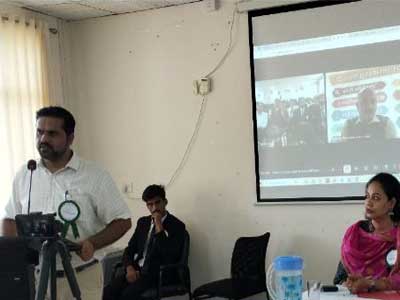
Aligarh: Provisions of the Information Technology Act 2000 and its role in cybercrime investigations, digital forensics and legal frameworks were discussed in detail by Dr Phaneendar BN, a court-commissioned forensic expert, at a workshop organised by the Career Counselling and Guidance Cell in Department of Law at Aligarh Muslim University Centre, Malappuram.
In his online presentation, Dr Phaneendar explained technical aspects such as hashing i.e. ensuring evidence integrity, digital imaging i.e. preserving data for forensic analysis, and the importance of handling digital evidence correctly for court admissibility.
He engaged the audience with real-life scenarios and posed questions on detecting cybercrime and the role of forensic experts. He also covered various types of cybercrime such as hacking, identity theft, and online fraud.
Dr Phaneendar explained how criminals exploit platforms like online gaming and phishing to target victims. He also discussed tools used by fraudsters, including Search Engine Optimization to boost fraudulent sites and VPNs to mask identities.
The forensic expert highlighted challenges in cybercrime investigations, including jurisdictional issues, the rapid pace of technological change, and delays due to non-compliance with Turnaround Time for handling digital evidence.
Dr Phaneendar shared strategies for identifying phishing scams and securing personal devices and also explained the digital arrest concept, where criminals are tracked based on their digital footprint.
The session concluded with guidance on the cybercrime complaint process, detailing various ways victims can report fraud, including through national portals and law enforcement agencies.
Earlier, Dr Faisal KP, Director of the Centre inaugurated the session, focusing on the need for legal professionals to understand digital evidence handling.
Dr Shahnawaz Ahmad Malik, Course Coordinator highlighted the increasing need for expertise in cyber security and forensics.
Afina SS, Secretary, introduced the theme of the programme, while, Dr Deeba Khanam, Convener of Career Counselling and Guidance Cell briefly outlined the activities of the Cell.
Mohammad Sanaulla Khan, General Secretary proposed a vote of thanks.
Related Items
Aman becomes youngest standing counsel in Supreme Court
Department of Geology at AMU celebrates Foundation Day
First advanced surgery for cancer of food pipe performed in Aligarh