
As the devotees throng the holy shrine of Mata Vaishno Devi, they are discovering, to their surprise, a cleaner and greener Katra.
This hilly destination in Jammu and Kashmir's Reasi district, which is home to the revered shrine, draws multitudes of pilgrims annually. Due to deforestation and tourism-related development, the region has over the years witnessed environmental degradation, soil erosion, diminished water retention, ecological imbalance, pollution, and diminished biodiversity.
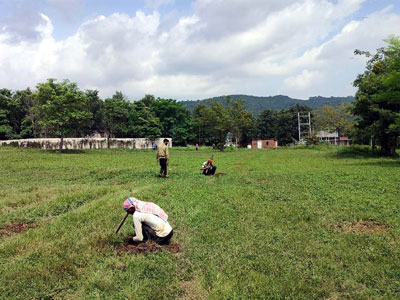
Recognising that reforestation is essential to restore ecological stability, social organisations have planted over 26 thousand trees to expand the green cover in Katra. The project, 'Trees for Shri Mata Vaishno Devi,' has also played a critical role in generating employment opportunities for the locals.
Pradip Shah, the co-founder of Grow-Trees.com, elucidates, "Katra has immense religious and ecological significance and our project 'Trees for Shri Mata Vaishno Devi' is an attempt to resolve some of the environmental challenges it has been facing. These include poor air quality and the ecological imbalance of rapidly developing urban infrastructure. Targeted reforestation is now not only helping to create green spaces on degraded land but also creating a template for ecotourism that strikes the right balance between the needs of the pilgrims and the preservation of biodiversity."
The trees planted include Khair, Bil Patri, Neem, Simbal, Palash, Tunnu, Gulmohar, Amla, and Safeda among others. Strategic plantation planning and adaptive measures helped address challenges like difficult terrain and erratic weather conditions. At the same time, local communities were engaged to ensure the long-term care of the planted saplings. "Their engagement is crucial, as they take on the responsibility for essential tasks such as regular watering, weeding, and monitoring the planted saplings. Additionally, they protect the saplings from potential threats, including grazing by cattle," informs Shah.
Ankush Dogra, Site Supervisor, adds, "I’ve had the privilege of witnessing firsthand the positive changes we are bringing to Katra. Overseeing the planting process, I see our community members' dedication and hard work. This campaign not only combats air pollution and restores biodiversity, but it also creates jobs for the local people. It’s inspiring to see the community come together to nurture these saplings."
Resident Asha Rani (38) discusses the community project enthusiastically and says, "Being involved in the tree plantation efforts has been incredibly rewarding for me. The campaign has also provided much-needed employment opportunities for many of us, helping to stabilise our livelihoods."
Taro Devi (38) also participated in various plantation activities and not only supported her family with extra income but was also able to pay her children’s school fees. Such success stories have encouraged other women in the community to make a difference in their environment while empowering themselves economically. Additionally, as the trees mature, the community can benefit economically from timber and fruits, further supplementing their income.
Discussing the far-reaching effect of the project, Shah concludes, "As the community members prepare seedlings in nurseries, transport them to planting sites, and participate in the planting and maintenance of the trees, this engagement also empowers them with knowledge related to environmental management and conservation. The results of this collaborative synergy are now visible in Katra."